SIMP and FSMA 204, from one lot record
NOAA's Seafood Import Monitoring Program wants harvest-to-entry chain of custody. FDA's Food Traceability Rule wants every lot traced through your plant. LOT AXIS keeps the import details and the lot history on the same record, so one system answers both.
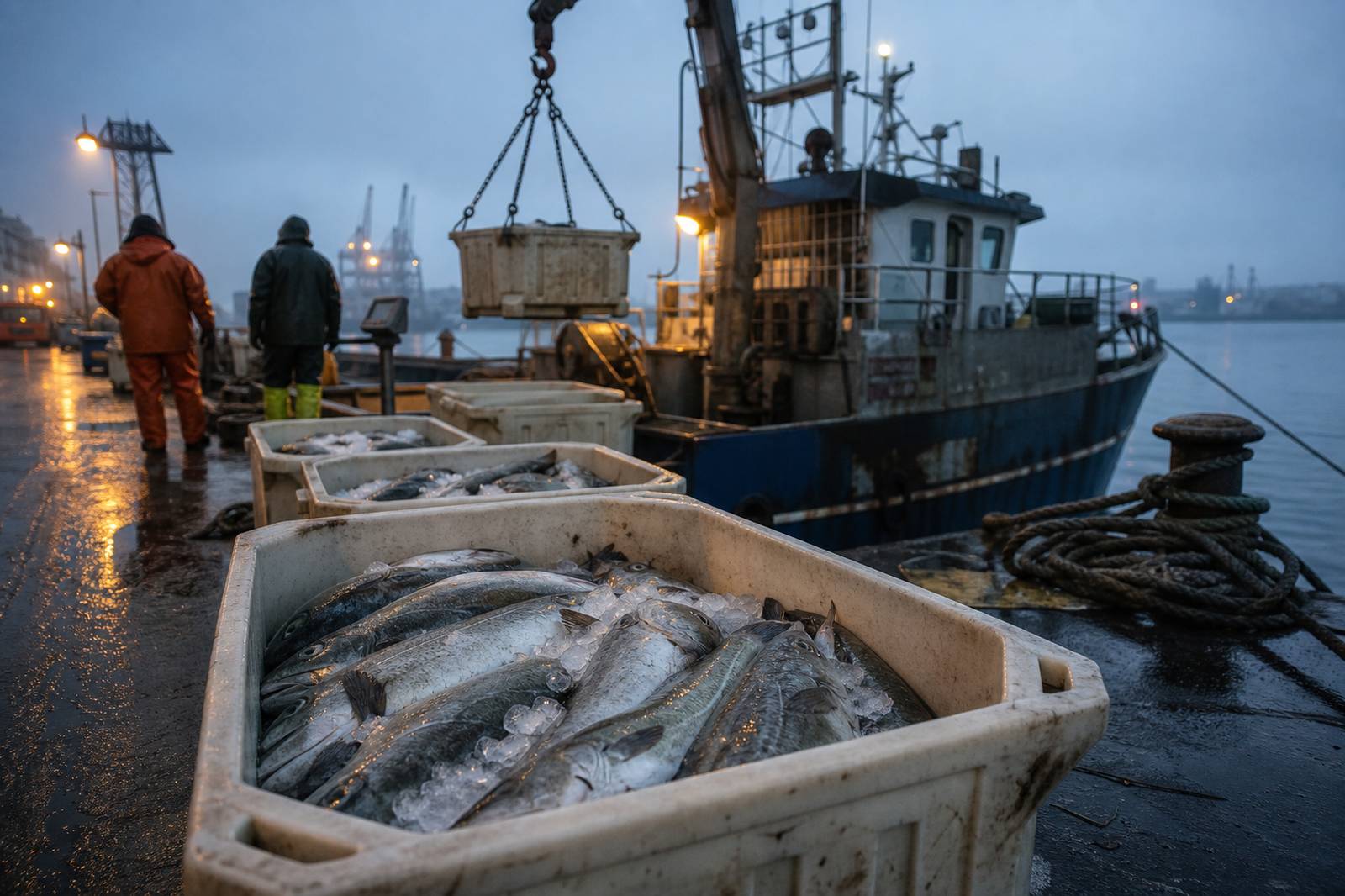
What SIMP is, in plain English
50 CFR Part 300, Subpart Q. A NOAA border program that stops at the point of entry.
The importer of record
The holder of the International Fisheries Trade Permit (IFTP) reports and keeps the records. Processors buying imported raw material get asked for their part.
13 species groups
More than 1,100 species, including tunas, Atlantic and Pacific cod, shrimp, red king crab, blue crab, mahi mahi, grouper, red snapper, swordfish, sharks, abalone and sea cucumber.
Illegal and misrepresented fish
SIMP exists to keep illegally caught and mislabeled seafood out of U.S. commerce. It follows the fish from harvest to entry and then stops.
What SIMP asks for, and where LOT AXIS does it
SIMP filing is done by the importer at entry. These are the records behind it, and how LOT AXIS keeps them with the lot.
Harvest and landing data at entry
Species, harvest area and gear, vessel or farm, landing date and place, and IFTP number, reported through ACE at entry.
✓The filing stays with your customs broker. LOT AXIS keeps the entry and supplier lot on the inbound lot, so the filed data and the fish on your floor can be matched.
Chain of custody records
Records that trace the product from point of entry back to harvest, including bills of lading and transshipment.
✓Every receipt becomes a lot with its supplier, date, weight and reference document. Each later move or conversion is linked to it.
Processing and commingling
Records of processing, reprocessing and commingling of the imported product.
✓Every cut, portion, repack or blend creates a new lot linked to the input lots and quantities. Commingled product keeps all its sources.
Produce records on audit
When NOAA audits an entry, supply the supporting records, typically within 5 to 10 days.
✓Enter the lot in Traceability View and print or share the trace. Minutes, not a week of pulling paper.
Start the FSMA 204 chain
Imported listed seafood usually arrives with no traceability lot code. The U.S. receiver must assign one.
✓The inbound lot assigned at receipt is your traceability lot code, printed on the label and carried to every downstream lot.
Keep it 2 years
Retain chain of custody records for two years from import.
✓Lot history stays in your own database, on your own servers, for as long as you keep it.
What it looks like in LOT AXIS
Real LOT AXIS screens and reports, shown with sample data.
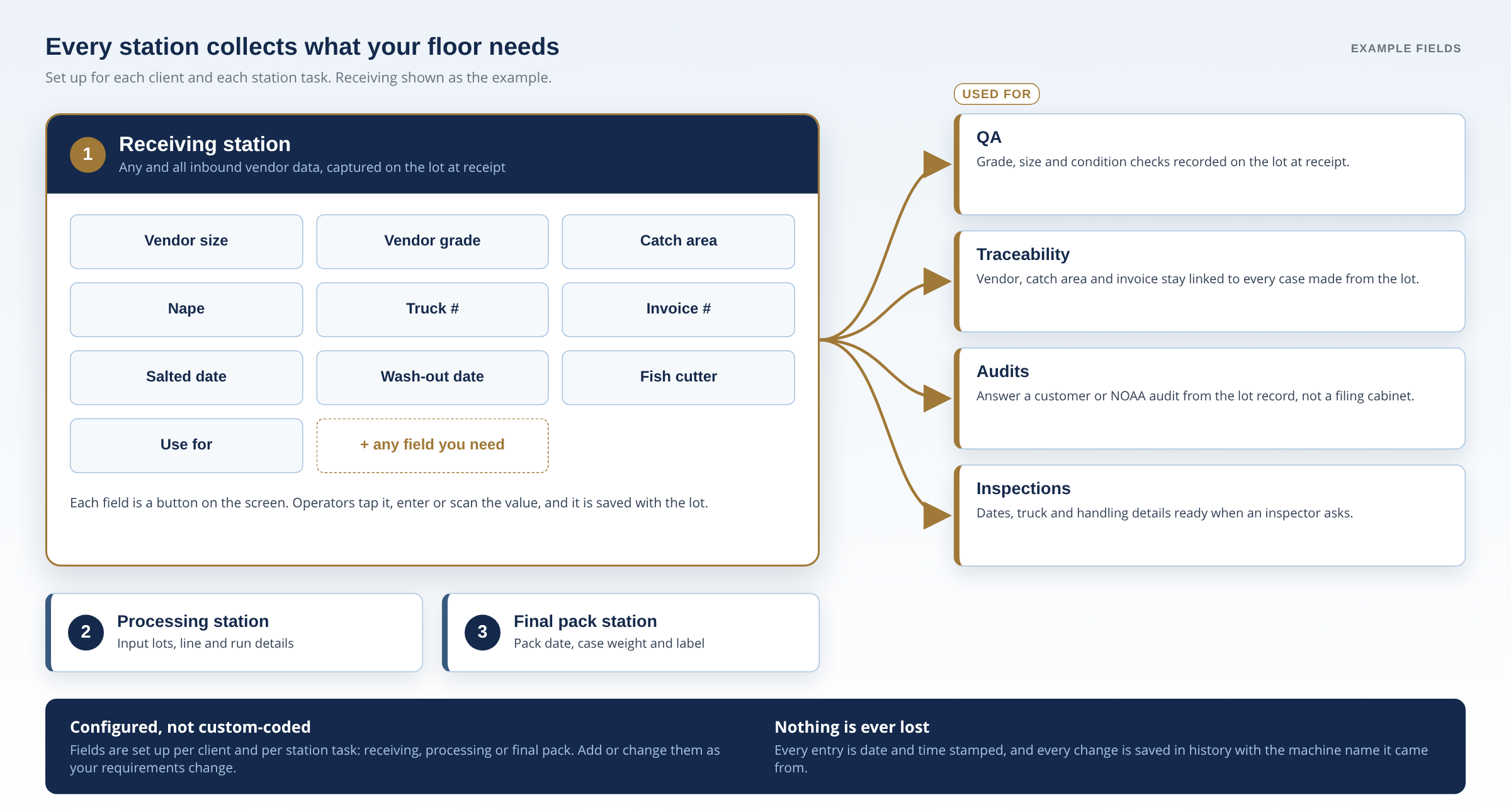
Captured at receiving
Receiving collects any inbound vendor data you need for QA, traceability, audits and inspections, and every station is configured the same way.
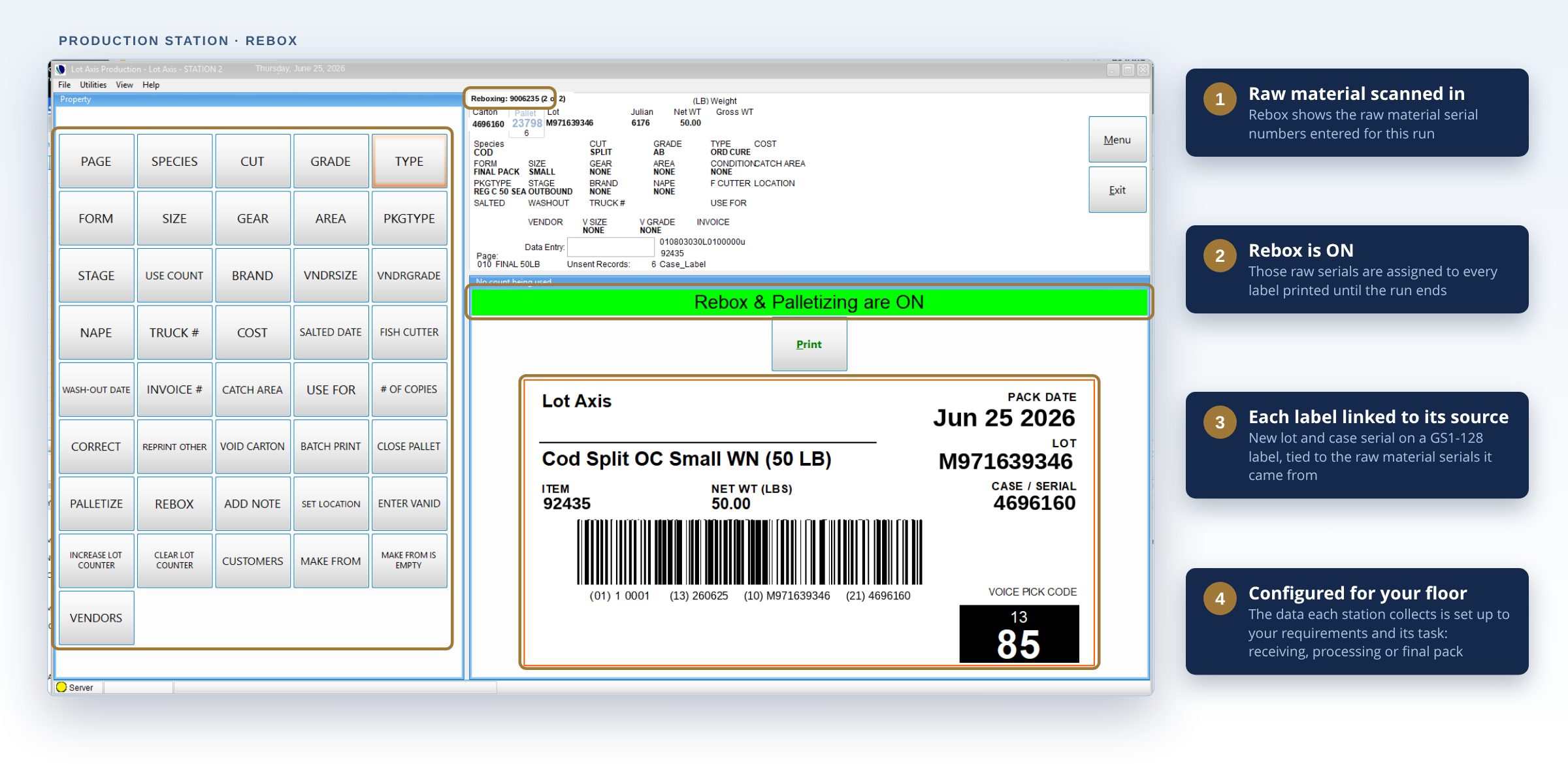
Inputs linked to outputs
Every portion or repack lot is linked back to the imported lot it came from.
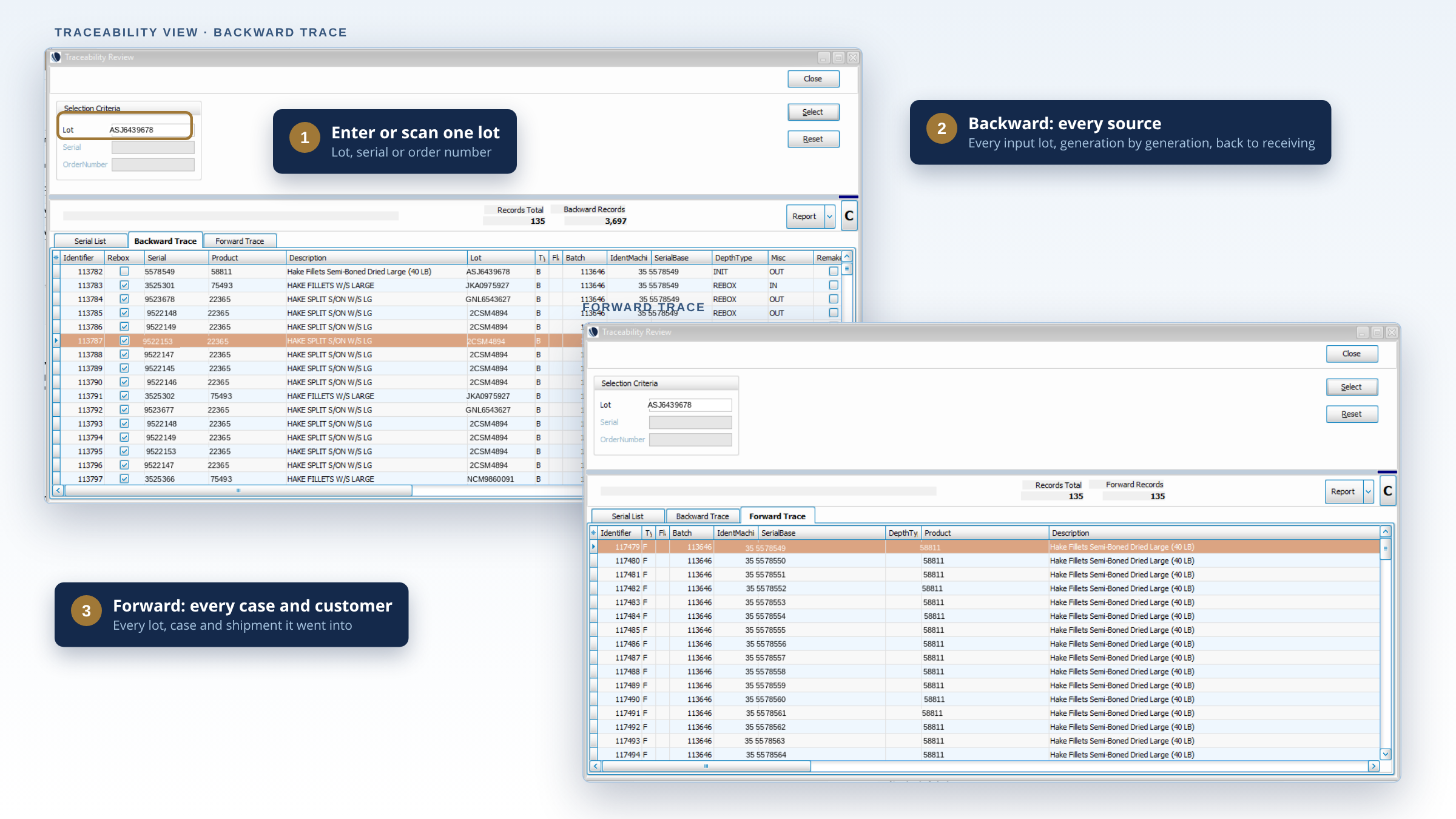
Start from any lot
Start from a finished case and see the imported lot it came from, or start from the import and see every customer.
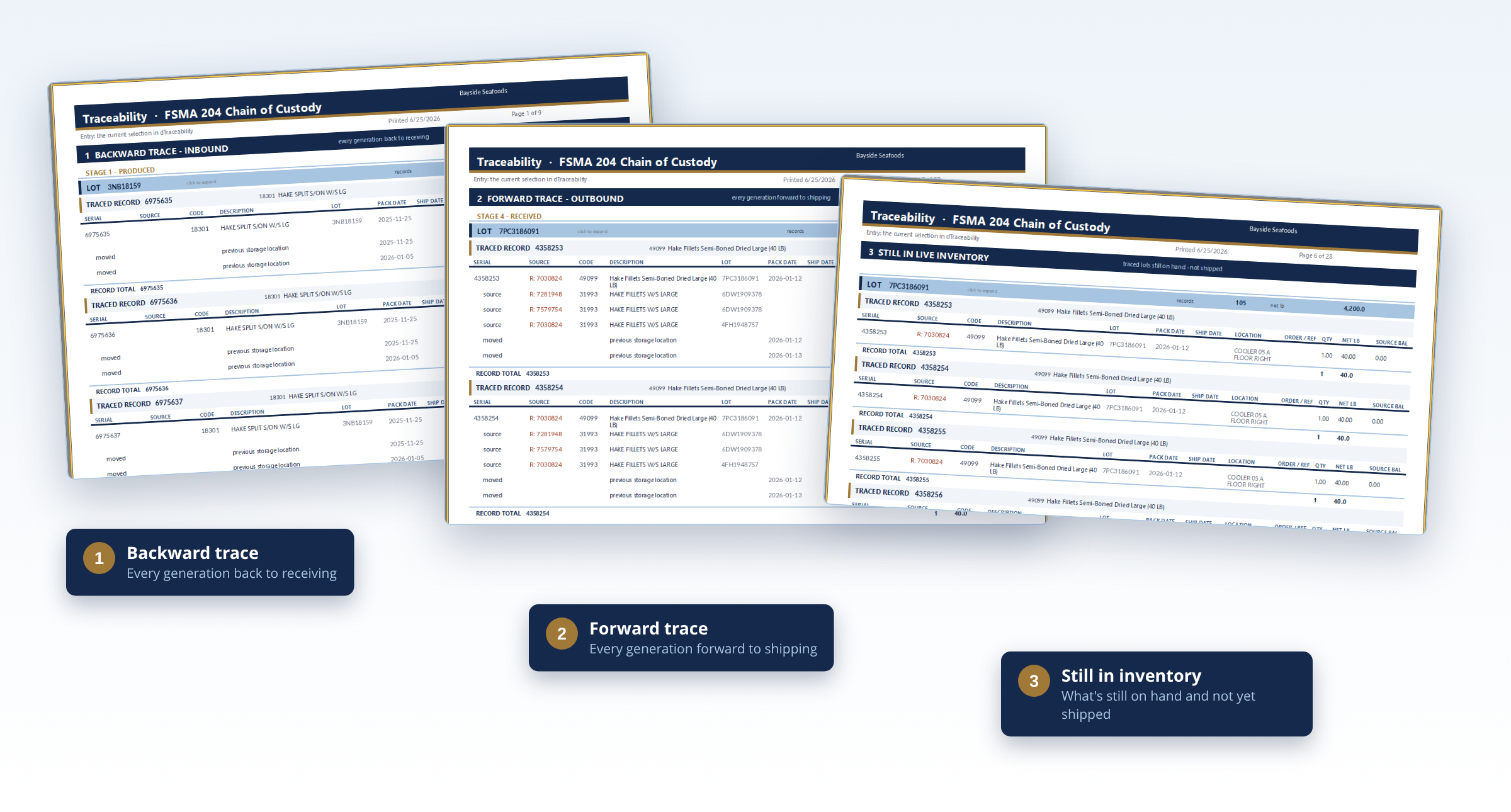
Hand over the record
The same trace report answers a NOAA chain of custody request and an FDA request from the same data.
SIMP questions we hear most
Does LOT AXIS file SIMP data?
No. SIMP data is filed through ACE by the importer of record, usually via a customs broker. LOT AXIS keeps the records behind the filing linked to the lots on your floor.
We don't import. Does SIMP affect us?
If you buy imported SIMP species, your importer or customer may ask you for processing and commingling records. Those come straight out of the lot history.
Is SIMP expanding?
NOAA's Action Plan proposes extending traceability to all seafood imports, with full data for higher-risk species. Congress directed NOAA to move forward with it in FY2026.
How does SIMP relate to FSMA 204?
SIMP ends at the point of entry. FSMA 204 starts with the first U.S. handler. The lot you assign at receipt connects them.
What does a demo look like?
Bring one imported lot. In 30 minutes we follow it from receipt through processing to shipment in LOT AXIS and show you the trace that comes out.
Go deeper
Plain-English guides from the LOT AXIS Knowledge Center.
Species and Grade Integrity: What Mislabeling Studies Mean for Honest Processors
ReadTraceability Lot Codes, Explained: Who Assigns Them, Who Keeps Them, Who Passes Them On
ReadGeneral information about federal regulations, not legal advice. Confirm your obligations against 50 CFR Part 300 Subpart Q, 21 CFR Part 1 Subpart S and NOAA's current species list.
Bring one imported lot. We'll trace it both ways.
In a 30-minute demo we follow an imported lot from entry to your customers and show you the records NOAA and FDA would ask for.