Grinding records that hold up to inspection
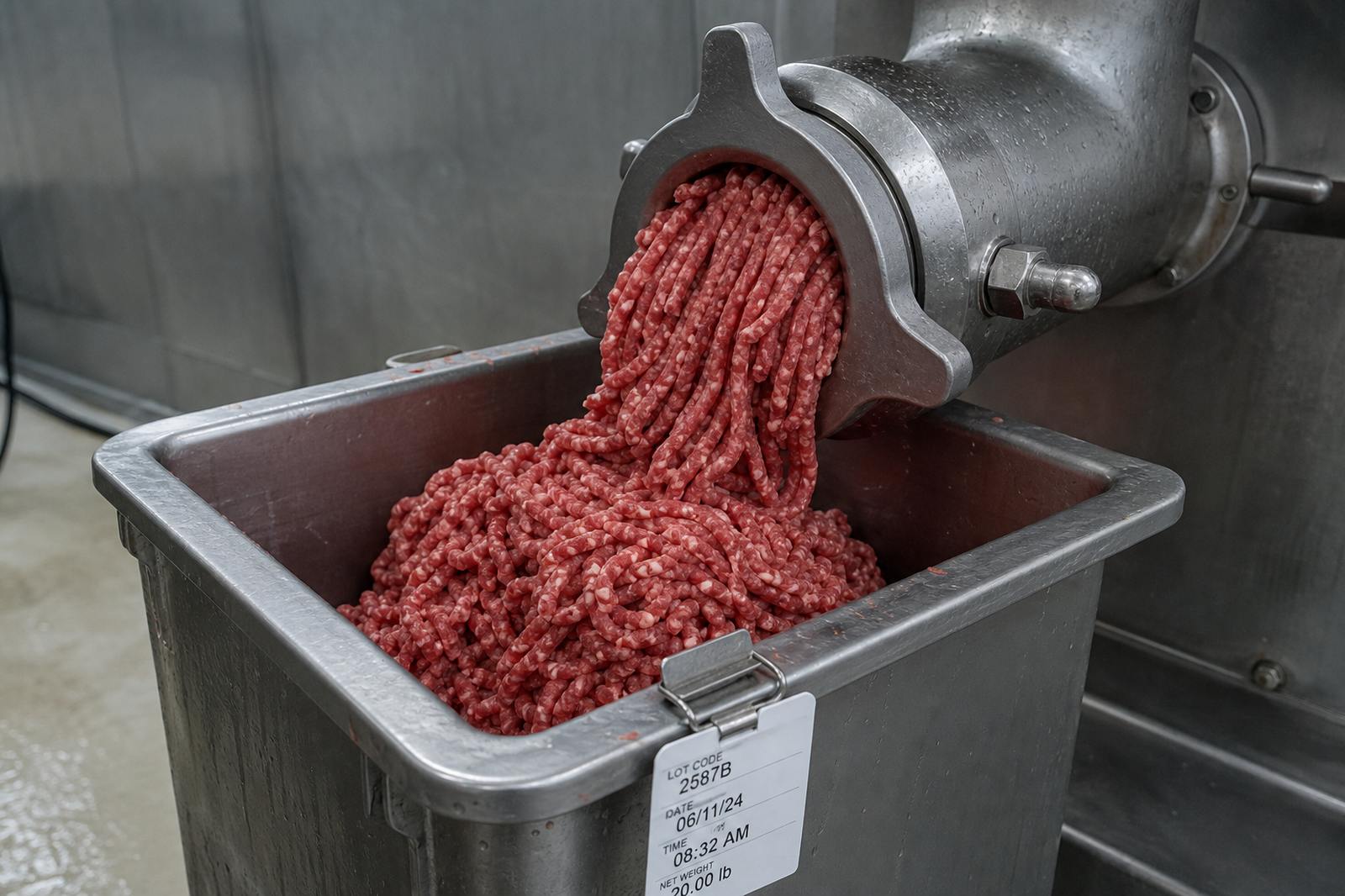
Since 2016, every plant and store that grinds raw beef has had to keep five records for each lot. LOT AXIS scans source lots into the grind, so supplier lots, production times and every customer are on the record before the inspector asks.
What FSIS asks for, in plain English
9 CFR 320.1(b)(4). In force since June 20, 2016.
Anyone grinding raw beef
Official establishments and retail stores that grind raw beef for sale, including beef ground at a customer's request when new source materials are used.
Five records per lot
Supplier establishment numbers, all supplier lot numbers and production dates, the source materials including carryover, the production date and time, and the clean-up date and time.
Routine HACCP tasks
Inspectors verify grinding records during routine Raw Non-Intact HACCP tasks, not only after a positive test.
What the grinding rule asks for, and where LOT AXIS does it
The five required records, plus the lot definition and recall procedures that sit around them.
Supplier establishments and lots
The establishment numbers of suppliers, and all supplier lot numbers and production dates, for each grind lot.
✓Supplier details go on the inbound lot at receiving. When trim is scanned into the grind, its supplier lots come with it, so nobody copies them from a box.
Source materials, including carryover
The names of all materials used, including material carried over from the previous lot.
✓Every input lot scanned into the run is listed on the grind lot. Carryover from the previous lot can be recorded as an input, so the link is in the data.
Production date and time
The date and time each lot of raw ground beef is produced.
✓Date and time are stamped automatically on every lot and label at the station.
Clean-up and lot boundaries
A lot runs from one clean-up to the next with the same source materials. Record when equipment is cleaned and sanitized.
✓A new grind lot starts when the run starts, so lot boundaries are set by the system instead of a clipboard. Your sanitation record shows the clean-up time against each lot.
Show one lot on request
Inspectors request the records for a specific lot and check that everything is there.
✓Enter the grind lot and see every source lot, supplier and customer. Print it or share it.
Recall procedures
Written procedures for deciding on and carrying out a recall.
✓Forward trace lists every customer who received an affected lot, with dates and quantities, so your recall procedure has a complete list to work from.
What it looks like in LOT AXIS
Real LOT AXIS screens and reports, shown with sample data.
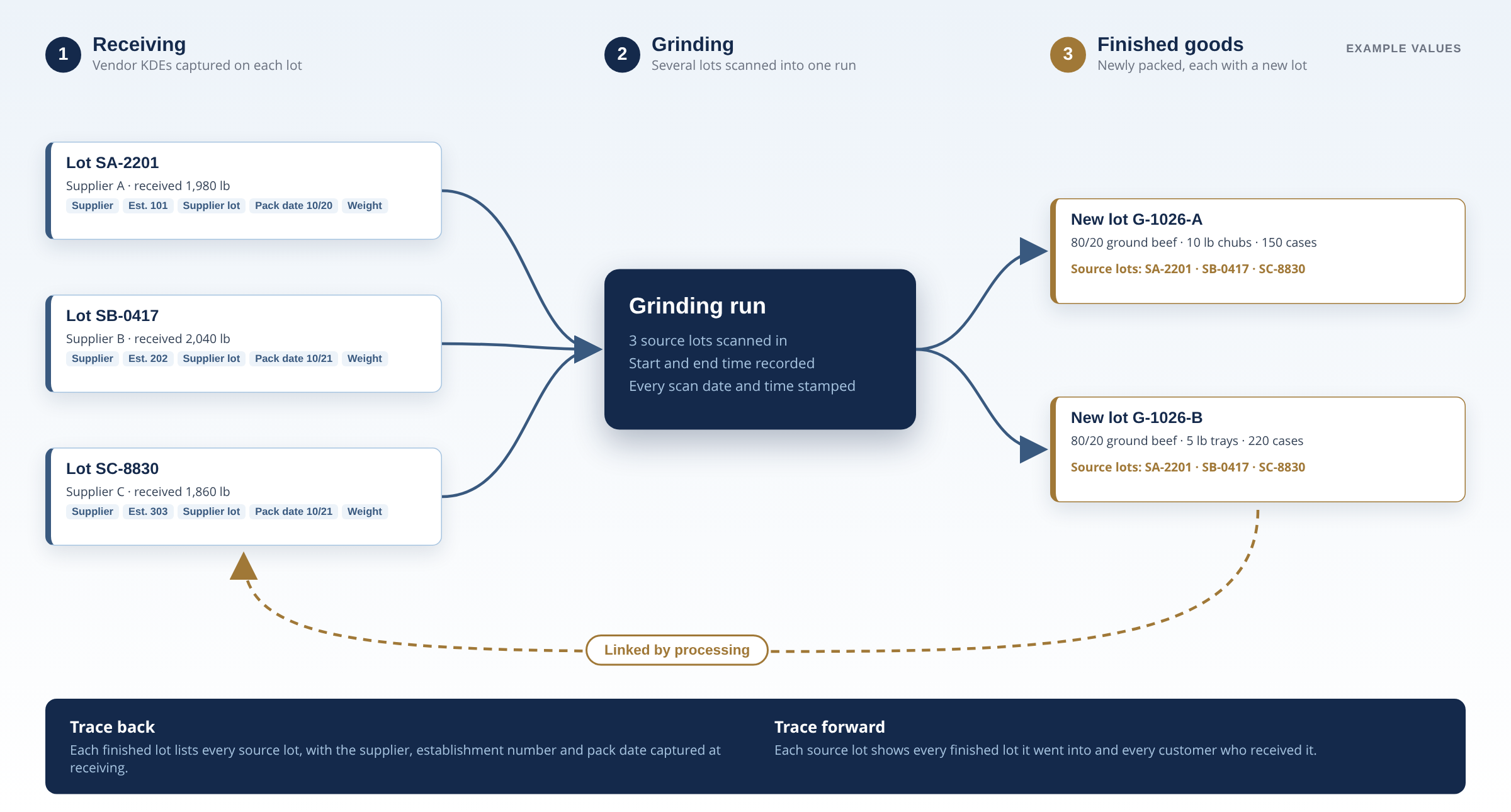
From receiving to a linked grind lot
Each finished lot names every source lot and its supplier details.
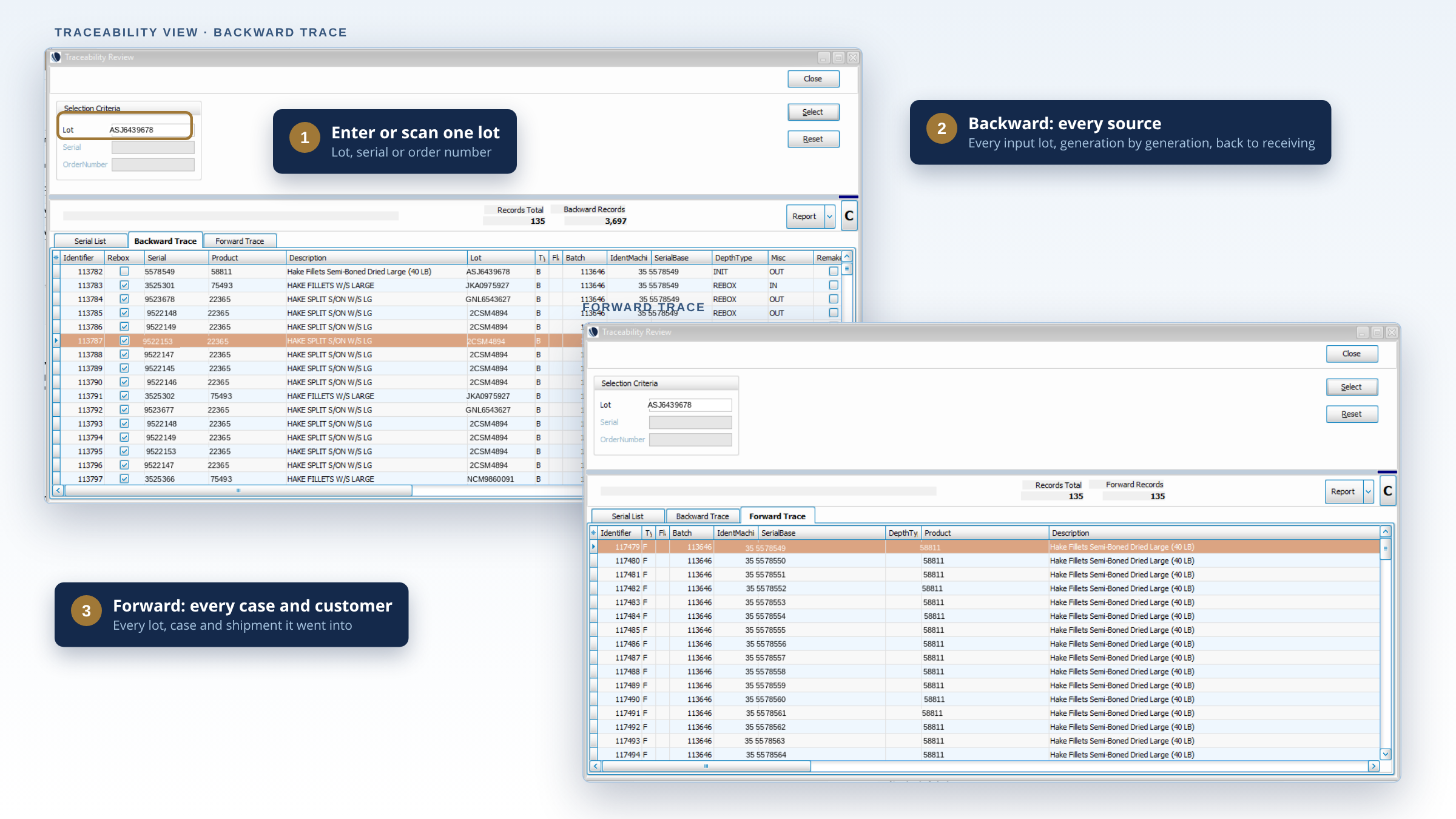
Start from any lot
Start from a grind lot and see every supplier lot behind it, or from a supplier lot and see every grind lot it went into.
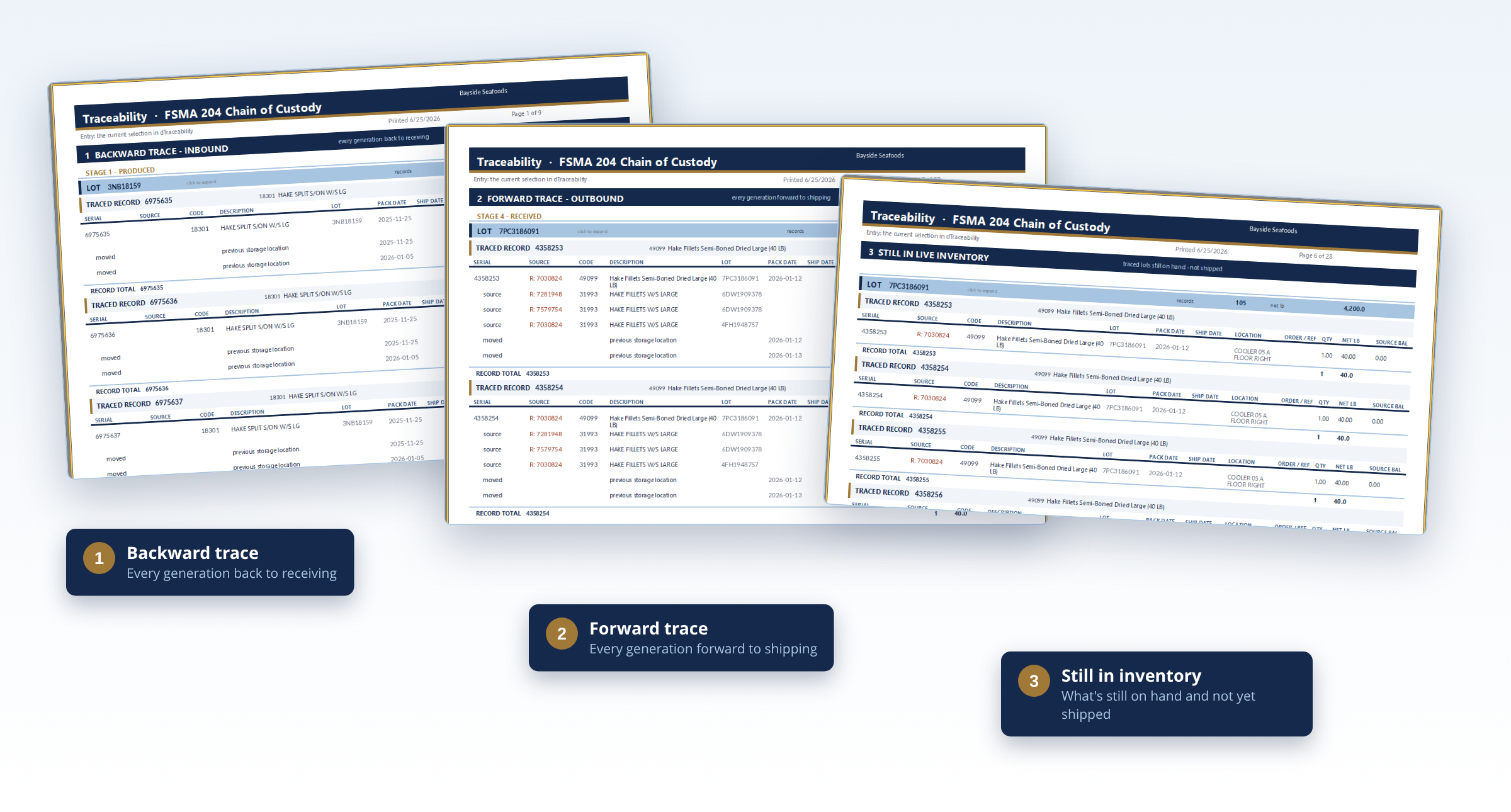
Hand over the record
Hand the inspector one lot's full record, printed or shared on screen.
Meat and poultry questions we hear most
Does FSMA 204 apply to our meat plant?
Meat and poultry under exclusive USDA jurisdiction are exempt. FDA-regulated meats such as bison, venison and rabbit are covered, and so are FDA-listed ingredients you receive.
How small should a grind lot be?
That's a business decision with recall risk attached. Smaller lots, with a clean-up between supplier changes, keep a recall narrow. LOT AXIS makes small lots easy to track.
Do we have to replace our accounting system?
No. LOT AXIS is not an ERP. It runs the floor and passes production, inventory and shipment data to the system you already use.
What hardware does it use?
Touchscreen stations, scales, label printers and Android handhelds for warehouse work: Load/Unload, Move, Inventory, Palletize and Process (Rebox) Raw Materials.
What does a demo look like?
Bring one grind lot from last month. In 30 minutes we follow it in LOT AXIS from trim receipt to shipment and show you the record an inspector would see.
Go deeper
Plain-English guides from the LOT AXIS Knowledge Center.
Foreign Material and Undeclared Allergens: The Two Biggest Recall Causes Are Label and Lot Problems
ReadGeneral information about federal regulations, not legal advice. Confirm your obligations against 9 CFR 320.1, 9 CFR 418 and current FSIS directives.
Bring one grind lot. We'll show you its full record.
In a 30-minute demo we follow a real grind lot from trim receipt to shipment and show you what an inspector would see.