Seafood traceability that keeps up with the season
Every delivery, catch weight and pack gets its own lot, linked through every cut and conversion. When a buyer, importer or auditor asks where a case came from, you answer on the call.
SIMP applies at every entry today. FDA won't enforce FSMA 204 before July 20, 2028, but many buyers already ask for lot-level records.
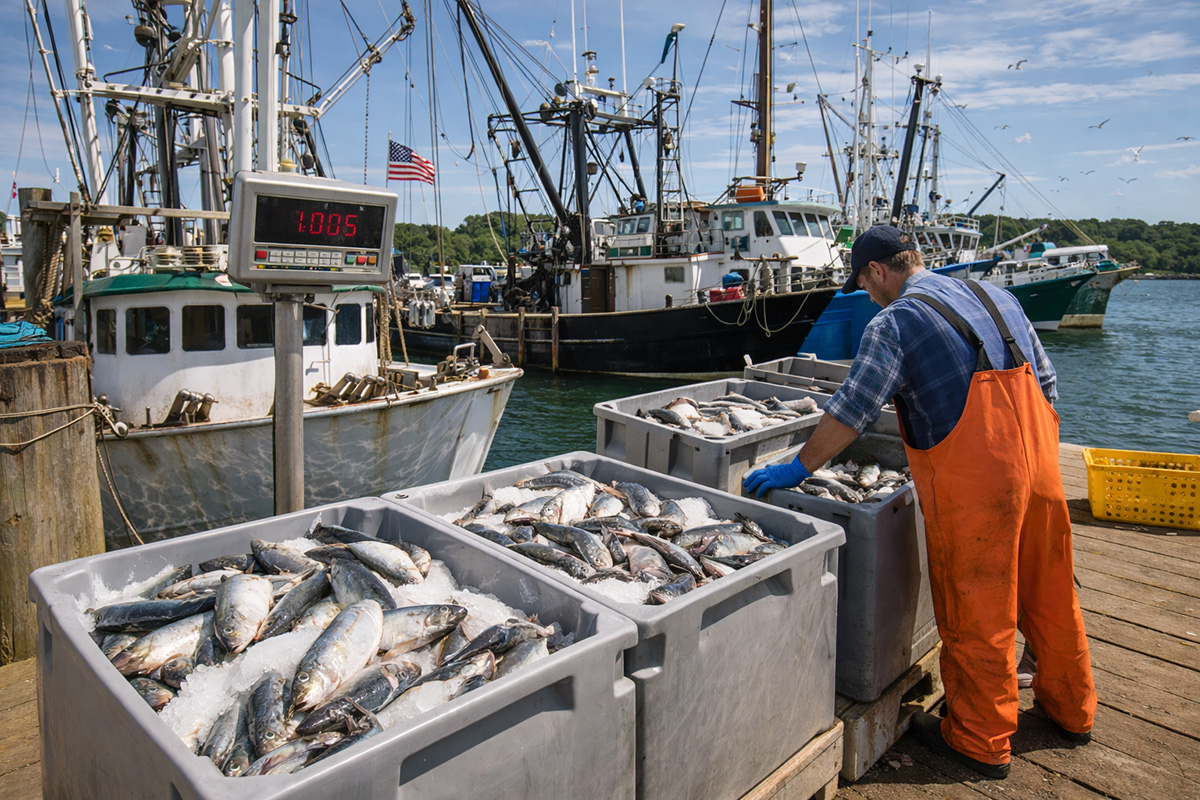
The season doesn't wait for the paperwork
Openers run around the clock. That is exactly when paper tickets and end-of-shift data entry lose lot information.
Volume you can't slow down for
During an opener the line runs day and night. If lot details live on tickets and whiteboards, they get re-keyed late, or not at all.
SIMP and FSMA 204
SIMP covers imported species like tuna, cod, crab and shrimp. FSMA 204 covers finfish, crustaceans and molluscs on the Food Traceability List. Many plants answer to both.
Every case weighs something different
If the weight on the label, in inventory and on the invoice don't match, you either give product away or argue with your buyer.
From the dock to the truck
The same five steps whether you run salmon, crab, groundfish or shellfish.
Receive
Each delivery gets a lot with its supplier, vessel, species and grade. Weights come straight off the scale.
Process
Head and gut, fillet, portion. Every output lot is linked to the delivery lots that went in, so yield shows up by lot.
Pack and label
Case labels print at the station with weight, lot and GS1-128 barcode. Nobody types a lot number.
Store
Lot-level inventory by location. Android handhelds handle palletizing, moves and counts on the floor.
Ship
Scan each case and pallet as it loads. Bills of lading and packing slips come from the scans.
Every pound accounted for, from the dock to the truck.
During an opener nobody has time to write things down. LOT AXIS captures lots, weights and labels at the station, so your yields, inventory and trace reports are right without slowing the line.
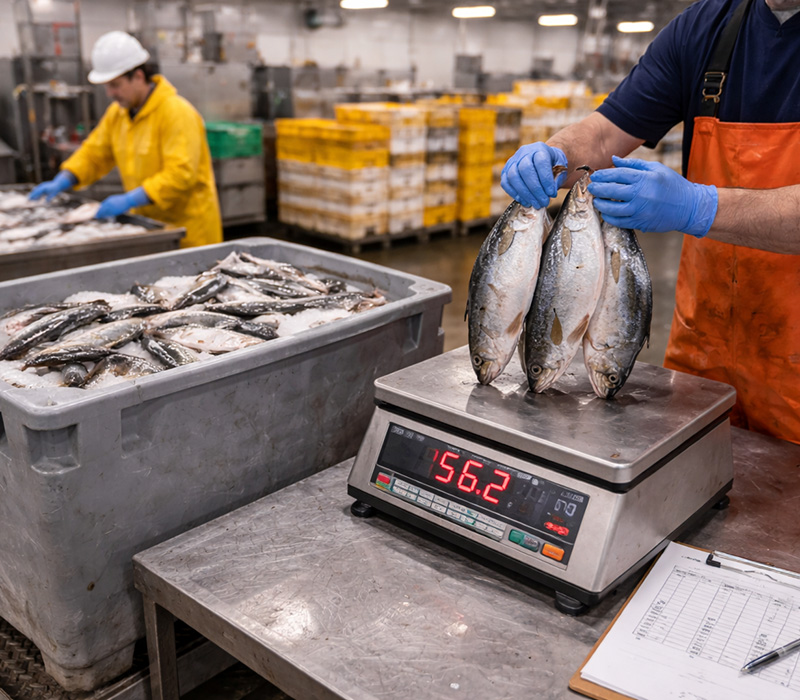 Catch weight
Weigh it once, use it everywhere
- Case and pallet catch weights in live inventory
- Weights carried through to shipments and your accounting system
- No re-keying at the end of the shift
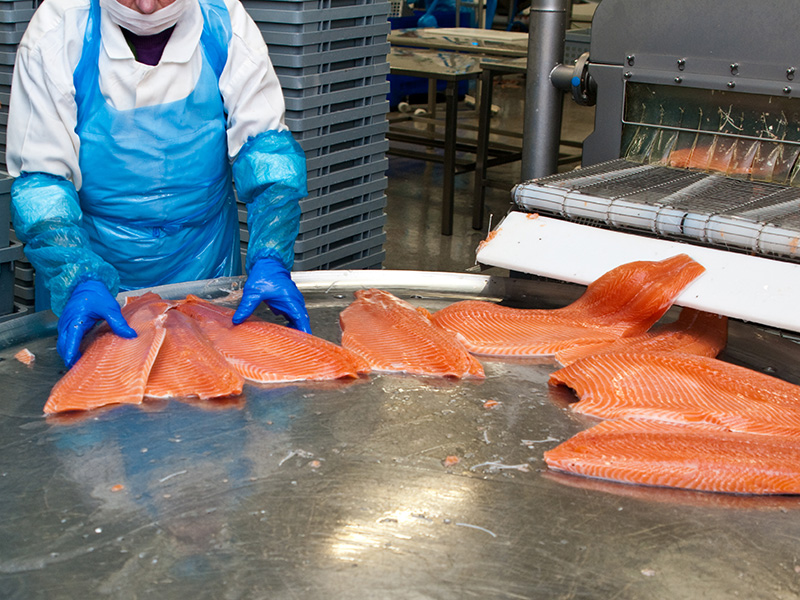 Yield
Yield by delivery, species and grade
- Yield by product, grade and shift
- Compare boats, suppliers and lines
- Manager KPIs in the Lot Intelligence™ dashboard
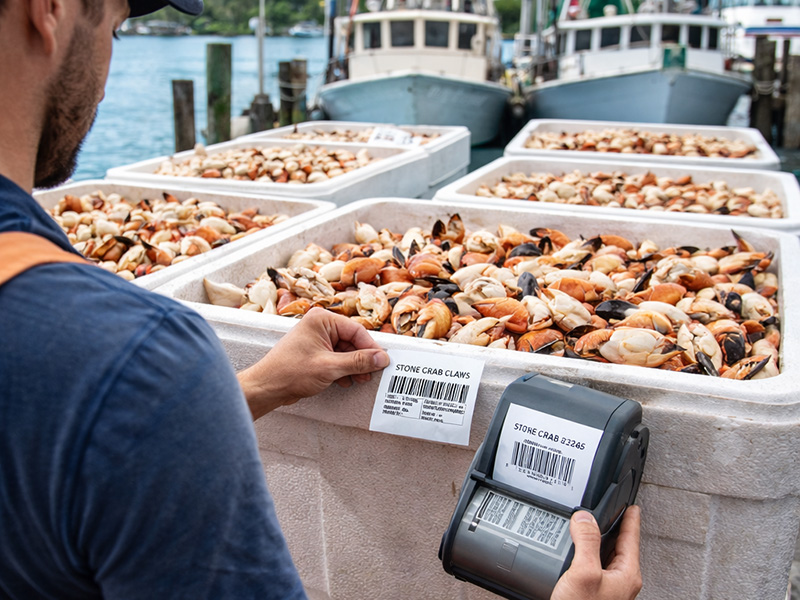 Labels
Case labels your buyers' systems can read
- GS1-128 and customer-specific formats
- Batch or on-demand printing at each station
- Bin, case and pallet labels from the lot record
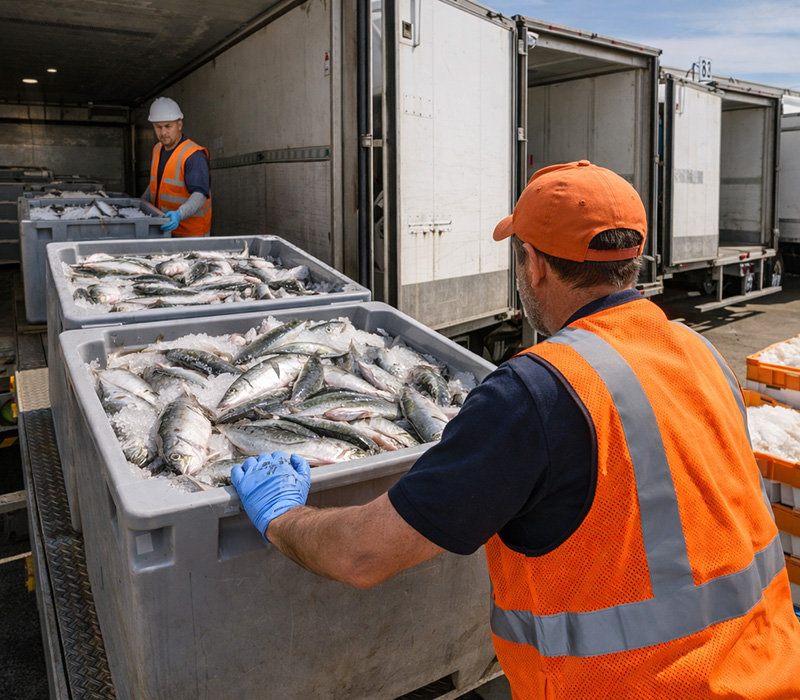 Shipping
The right case on the right truck
- Scan-validated loading against the order
- Bills of lading and packing slips from the scans
- Every shipment linked to its lots for a forward trace
Built for the season, proven in seafood plants
SIMP and FSMA 204 answers on the call
Supplier, vessel and harvest details stay with every lot made from a delivery, so a trace takes minutes.
Keeps pace with an opener
Data is captured by scanning and weighing at the station, so the crew never stops to write anything down.
Not another ERP
LOT AXIS runs the floor and passes production, inventory and shipment data to the accounting system you already use.
Live in about 3 months
Typical time from order to go-live. We map your flow, then set up the stations, labels and integrations.
What the rules ask for, and how LOT AXIS answers
Seafood plants answer to SIMP, FSMA 204 and their buyers' audits. Here's what each one asks for and where LOT AXIS covers it.
Harvest and landing data for imported species
Species, harvest area, vessel, and landing date and place, reported at entry by the importer of record.
The filing stays with your importer. LOT AXIS keeps the supplier, vessel and harvest details on the delivery lot and every lot made from it, so you can answer quickly.
Key data at receiving, processing and shipping
For seafood on the Food Traceability List: lot codes, quantities, locations and dates at each step.
Lots, weights and dates are captured by scanning and weighing at each station, and a new lot is linked at every conversion.
A sortable spreadsheet within 24 hours
During an outbreak or recall, FDA can ask for your traceability records as an electronic sortable spreadsheet within 24 hours.
Start a trace from any case label, delivery or shipment in minutes. Print or share the report, and export the screen data to Excel or CSV as your sortable spreadsheet.
Trace tests for audits and buyers
Auditors pick a lot and ask you to trace it back to raw material and forward to every customer.
Back to the vessel and forward to every customer, from one trace.
Is your plant ready for SIMP and FSMA 204?
Sixteen yes-or-no questions your QA lead can answer in ten minutes. You'll see exactly where a trace request would get stuck.
- Receiving, processing, labels and shipping
- A simple score and what to fix first
- Two pages, printable
Get the checklist
Enter your name and email and the PDF opens right away.
See it in a seafood plant
How a seafood processor improved traceability and inventory with LOT AXIS.
We use Lot Axis for all our audits, mock recalls and customer trace requests. Labels, traceability, audits and shipping paperwork are all in one place, so it takes just a few minutes to find the information we need.Kelly Flurer, Owner, Flurer Smokery Ltd.SIMBA is now LOT AXIS
Know what SIMP and FSMA 204 actually ask for
Plain-English guides from the LOT AXIS Knowledge Center.
Take the seafood data sheet to your team
Two pages your plant manager, QA lead and owner can read in five minutes.
- How LOT AXIS runs a seafood plant, dock to truck
- Catch weight, labeling and yield in one system
- The stations, scales, printers and handhelds you'll need
Download the seafood data sheet
Enter your name and email and the PDF opens right away.
Seafood questions we hear most
Does LOT AXIS help with SIMP?
The supplier, vessel and harvest details you record at receiving stay attached to the lot and to every lot made from it, so you can give your importer or buyer what they ask for. The SIMP filing itself is made by the importer of record.
Can it keep up during an opener?
LOT AXIS, originally SIMBA, has run in seafood plants in Alaska, Washington, British Columbia and Atlantic Canada for years. Data is captured by scanning and weighing at the station, so the crew doesn't slow down to write anything.
Do we have to replace our accounting system?
No. LOT AXIS is not an ERP. It runs the floor and passes production, inventory and shipment data to QuickBooks, NetSuite, NetYield or the system you already use.
What hardware does it use?
Touchscreen stations, floor and bench scales, label printers and Android handhelds for warehouse work: Load/Unload, Move, Inventory, Palletize and Process (Rebox) Raw Materials.
What does a demo look like?
Bring one real delivery from last season. In 30 minutes we follow it through processing and packing in LOT AXIS and show you the yield and trace report that come out of it.
Bring one delivery. We'll trace it to the truck.
In a 30-minute demo we follow a real delivery from your plant through processing and packing, and show you the yield and trace report that come out of it.